Sunday, August 30, 2009

NCDMF Covering their Backs...

I have found it interesting that as conservation issues arise and or intensify between the public and the people that are responsible for making and enforcing regulations it is the standard practice of regulatory bodies to dodge conflict. I've been attending our local North Carolina Marine Fisheries Commission Meetings and have been amazed at some of the antics I have witnessed. From commissioners voting on topics before the final scientific data is reviewed to making inflammatory statements about recreational fishermen I never cease to be surprised by the carnival like atmosphere that is present in our bureaucracies.


Recently I received a letter, pictured here, from the NCDENR Division of Marine Fisheries proclaiming that the Pamlico Sound Gill net restricted area will not open on Sept. 1 on schedule due to the concern over the probability of too many sea turtle interactions. Is it possible that Dr. Louis Daniel the Director of the NCDMF is warning commercial fishermen to be careful of their actions this year? Is it possible there will be more observers in the fishery documenting sea turtles interacting with gill netters and their gear? Why would the Director warn the commercial fishermen of a closure possibility unless they fear the sea turtle interactions in the Pamlico Sound Gill net restricted area will draw too much attention to what NC is doing with Permit 1528?


We are all watching with baited breath as this story unfolds...

Thursday, January 1, 2009

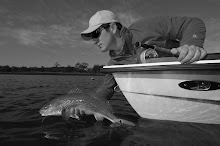
North Carolina's State Fish: Red Drum

Welcome Anglers,
If we are going to enlist change for better fisheries management in North Carolina I should first tell you a little bit about our states' saltwater fish, Sciaenops ocellatus aka redfish, red drum, spottail bass, puppy drum & channel bass.

The North Carolina General Assembly designated red drum the state saltwater fish in 1971, a resident fish the state had long been famous for due to its ability to reach trophy proportions on the sprawling coast, many fish grow to over 40 pounds in these waters still! The current all tackle world record for the species was caught off of Hatteras Island in 1984, the behemoth weighed in at 94 pounds, 2 ounces and was fought on surf tackle. To date 10 of the 16 world records for red drum were produced by anglers in North Carolina waters.

Red Drum are unique fish well adapted to life in coastal estuaries and sounds. Some of the defining characteristics of the species are their coppery color, their ability to make a "drumming" noise by vibrating muscles in their swim bladder and the easily distinguishable black spot (ocellatus) or spots that are almost always found near the tail and on rare occasions freckling the body. It is commonly believed that the "spot" keeps predators from attacking the fish at the head by mistaking the spot at the tail for a false eye. Combine this adaptation with the fact that a drums tail can almost scissor closed to escape hungry jaws and you have one well engineered shallow water gamefish.

It is commonly known that red drum spend the first 4-5 years of their lives surviving in shallow salt marshes, sounds and protected estuaries before becoming sexually mature and venturing out into the ocean or nearby inlets to spawn and grow larger. It is in the primitive years that red drum become susceptible to numerous hazards including but not limited to dolphins, sharks, alligators, birds of prey and man.

Of all of these hazards it is certainly man that has caused the most damage due to habitat loss and poor fisheries management practices. One major problem occurring on the North Carolina Coast is a single gill net, attended or not by its angler(s), can literally wipe out an entire year or years class of juvenile red drum in minutes. Furthermore while the North Carolina Department of Marine Fisheries intends to manage the fishery under a "bycatch" system the problem persists that many red drum, sea turtles and pelagic birds are entangled in commercial gill netting and drown and or spoil in nets left unchecked. This is a terrible predicament for a resource of such magnitude to be facing and we need your help to right the wrongs.

Stay tuned for the latest rulings regarding Red Drum Fisheries Management and other North Carolina Dept. of Marine Fisheries information and legislation.

Check back for more on our film and stay tuned for our new trailer!

Till next tide,
Capt. Seth~